
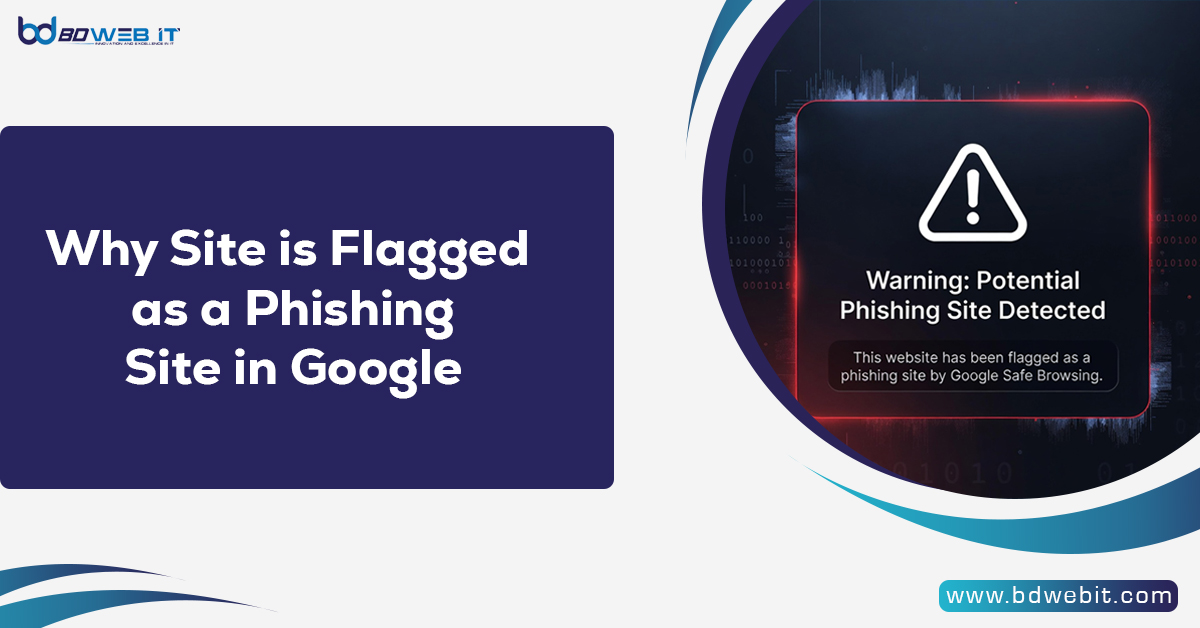
A site is flagged as a phishing site in Google when Google detects suspicious behavior, indicating that the website is trying to trick users into revealing sensitive information such as passwords, credit card numbers, or personal data. This typically happens when a site contains malicious scripts, fake login pages, deceptive content, hacked files, or is reported for fraudulent activity. Once identified, Google displays a warning like “Deceptive site ahead” to protect users from potential harm.
Learn why a site is flagged as a phishing site in Google, common causes like malware and hacking, and step-by-step solutions to remove the phishing warning and protect your website from future security issues.
What Is Phishing?
Phishing is a type of cyberattack where attackers impersonate legitimate websites, brands, or services to steal sensitive information. Hackers often clone login pages of popular services, create fake payment gateways, or inject malicious scripts into compromised websites.
Google actively monitors websites to protect users from such threats.
How Google Detects Phishing Sites
Google uses multiple security systems to identify phishing websites:
1. Google Safe Browsing
Google’s Safe Browsing technology scans billions of URLs every day. If it detects phishing patterns, malware, or deceptive practices, it flags the site.
2. Automated Crawlers
Google bots crawl your website content regularly. If they detect suspicious JavaScript, hidden redirects, or fake login forms, they may flag your site.
3. User Reports
If users report your website as suspicious through browsers like Google Chrome or services like Google Safe Browsing, Google may investigate and flag it.
4. Hosting and Blacklist Databases
If your hosting IP is associated with spam or malware activity, Google may treat your website as risky.
Common Reasons Why Your Site Is Flagged as Phishing
Let’s break down the most common causes:
1. Your Website Has Been Hacked
One of the biggest reasons is hacking. Attackers inject malicious code into your site without your knowledge. They may:
- Add hidden phishing pages
- Inject malicious JavaScript
- Create fake login portals
- Insert spammy links
Even if your homepage looks normal, hidden files can trigger Google warnings.
2. Fake Login or Payment Pages
If your website contains login or payment forms that resemble trusted brands, Google may classify it as phishing.
For example:
- Cloned banking login pages
- Fake email login forms
- Fraudulent payment gateways
Google detects brand impersonation using AI-based content analysis.
3. Malware or Suspicious Scripts
If your site loads:
- Malicious JavaScript
- Hidden iframes
- Redirect scripts
- Crypto-mining scripts
Google may immediately block access to protect users.
4. Deceptive Redirects
If users click your link and are redirected to:
- Spam sites
- Adult sites
- Fake giveaway pages
- Fake tech support pages
Your website can be flagged quickly.
5. Compromised WordPress Plugins or Themes
If you are using outdated plugins or nulled themes in WordPress, hackers can exploit vulnerabilities.
Many phishing flags happen because:
- Plugins are outdated
- Weak admin passwords
- No firewall protection
- No malware scanning
6. Suspicious Email Campaigns
If you send bulk emails containing your domain link and recipients report them as phishing, Google may flag your website domain.
7. Shared Hosting Issues
On shared hosting, if other websites on the same IP are involved in spam or phishing, your site’s reputation may suffer.
What Happens When Google Flags Your Website?
When flagged, users see warnings like:
- “Deceptive site ahead”
- “This site may harm your computer”
- “Phishing attack ahead”
Browsers like Mozilla Firefox and Safari also use Google Safe Browsing data, so the warning may appear across multiple platforms.
Consequences include:
- Loss of traffic
- SEO ranking drop
- Customer trust damage
- Business revenue loss
How to Check If Your Site Is Blacklisted
You can check using:
- Google Search Console
- Google Safe Browsing transparency report
- Third-party blacklist checkers
- Security plugins
If you use Google Search Console, check the Security Issues section for details.
How to Fix a Phishing Warning
Follow these steps carefully:
Step 1: Take Your Site Offline (If Necessary)
If heavily infected, temporarily disable public access.
Step 2: Scan for Malware
Use a professional security scanner or hosting malware scanning tool.
Look for:
- Unknown files
- Modified core files
- Suspicious JavaScript
- Hidden directories
Step 3: Remove Malicious Code
Clean infected files manually or restore from a clean backup.
Step 4: Update Everything
- Update CMS
- Update plugins
- Update themes
Change passwords (admin, FTP, database)
Step 5: Improve Security
- Install a Web Application Firewall (WAF)
- Enable two-factor authentication
- Disable file editing in CMS
- Use strong passwords
- Secure admin URLs
Step 6: Request Review from Google
After cleaning your website:
- Log in to Google Search Console
- Go to Security Issues
- Click “Request Review”
- Explain what you fixed
Google may take a few days to remove the warning.
How to Prevent Phishing Flags in the Future
Prevention is always better than recovery.
1. Keep Everything Updated
Backdated software is the number one reason websites get hacked.
2. Use Secure Hosting
Choose hosting with:
- Malware scanning
- Firewall protection
- DDoS protection
- Isolated accounts
3. Install SSL Certificate
Use HTTPS encryption. Browsers mark HTTP sites as “Not Secure.”
4. Monitor Website Changes
Set up alerts for:
- File changes
- Login attempts
- Traffic spikes
5. Avoid Nulled Themes & Plugins
Pirated software often contains backdoors.
6. Regular Backups
Daily backups ensure quick recovery.
SEO Impact of a Phishing Warning
When Google flags your website:
- Rankings drop dramatically
- Organic traffic stops
- Ads may be suspended
- Domain reputation decreases
Even after removal, it may take weeks to regain trust signals.
Real-World Example Scenario
Imagine a WordPress ecommerce store gets hacked through an outdated plugin. The attacker uploads a fake PayPal login page inside a hidden directory. Google crawls the page, detects brand impersonation, and flags the entire domain as phishing.
The store owner sees traffic drop to zero overnight.
After cleaning the infection and requesting a review, they remove the warning—but SEO damage remains for weeks.
Final Thoughts
A site is flagged as a phishing site in Google when it appears to deceive users into sharing sensitive information or contains malicious content. The most common causes include hacking, malware injection, fake login pages, outdated plugins, and suspicious redirects.
The key to avoiding phishing flags is strong security practices, regular updates, malware monitoring, and proactive website management.
If your site has already been flagged, act immediately—clean it thoroughly, strengthen security, and request a Google review as soon as possible.