
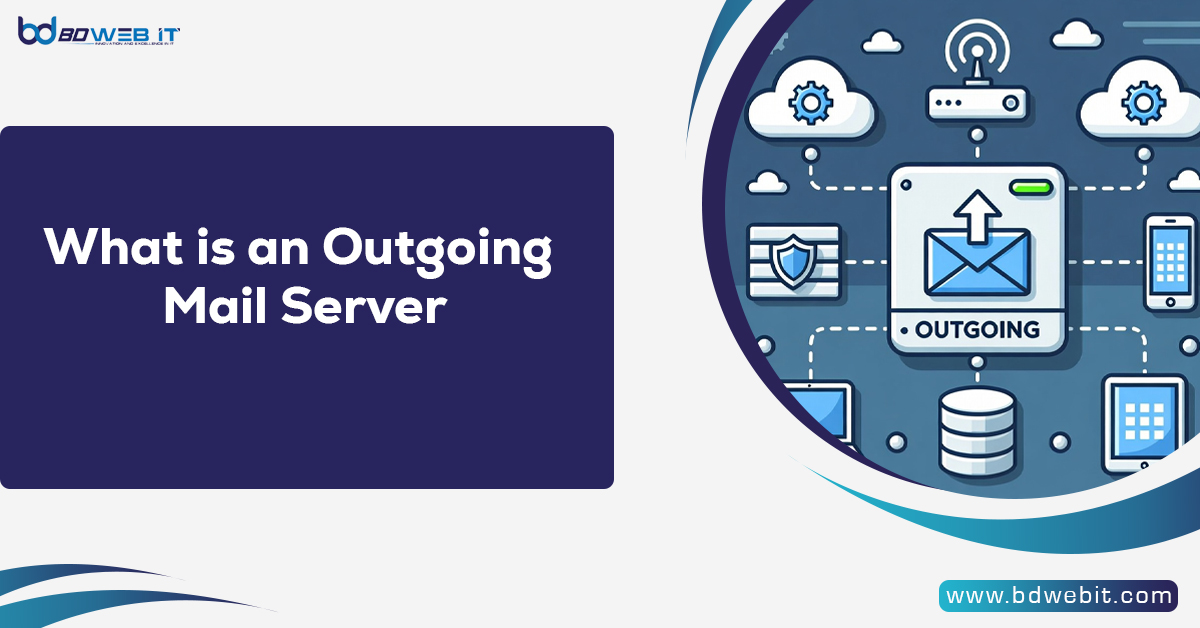
An outgoing mail server is the system responsible for sending emails from your email client or application to the recipient’s mail server using the Simple Mail Transfer Protocol (SMTP). In simple terms, when you click “Send,” your outgoing server takes your message, authenticates it, routes it across the internet, and ensures it reaches the recipient’s incoming email server safely and correctly. Without an outgoing mail server, emails would never leave your device or webmail interface.
Now let’s explore in depth how outgoing mail servers work, why they matter, and how to configure and optimize them for better deliverability.
The Role of an Outgoing Mail Server Explained
Every email system has two main components:
- Incoming Mail Server – Receives emails (IMAP or POP3)
- Outgoing Mail Server – Sends emails (SMTP)
The outgoing mail server uses Simple Mail Transfer Protocol (SMTP) to transmit messages from the sender to the recipient’s server. It acts as a digital post office, handling authentication, encryption, routing, and delivery confirmation.
When you send an email:
- Your email client connects to the SMTP server.
- The server verifies your login credentials.
- The message is processed and scanned.
- The email is forwarded to recipient’s mail server.
- The recipient retrieves it via IMAP or POP3.
How an Outgoing Mail Server Works (Step-by-Step)
Let’s dissect the procedure so that you can better understand it:
1. Email Creation
You compose a message in an email client like Microsoft Outlook, Mozilla Thunderbird, or Apple Mail.
2. SMTP Authentication
When you press “Send,” the client connects to the configured SMTP server. It verifies:
- Username
- Password
- Port number
- Encryption type (SSL/TLS)
3. Message Transfer
After successful authentication, the outgoing mail server:
- Checks the recipient domain
- Finds the recipient’s MX (Mail Exchange) record
- Forwards the message to the correct server
4. Delivery Confirmation
If delivery fails, you receive a bounce-back notification. If successful, the email is stored in the recipient’s inbox.
SMTP Ports Used by Outgoing Mail Servers
Outgoing mail servers use specific ports for secure transmission:
| Port | Encryption | Usage |
|---|---|---|
| 25 | None | Default SMTP (often blocked) |
| 465 | SSL | Secure SMTP |
| 587 | TLS | Recommended submission port |
Port 587 with TLS encryption is the industry standard for secure outgoing email transmission.
Why Is an Outgoing Mail Server Important?
1. Email Deliverability
A properly configured SMTP server improves inbox placement and reduces spam folder issues.
2. Authentication & Security
Outgoing servers implement:
- SPF (Sender Policy Framework)
- DKIM (DomainKeys Identified Mail)
- DMARC (Domain-based Message Authentication)
These protocols verify sender identity and prevent spoofing.
3. Reputation Management
Each outgoing mail server has an IP reputation. Sending spam or bulk emails without proper setup can damage that reputation and reduce delivery rates.
Types of Outgoing Mail Servers
1. ISP-Based SMTP Servers
Internet Service Providers offer SMTP servers for personal email accounts.
2. Web Hosting SMTP Servers
Hosting providers include SMTP services with shared hosting plans.
3. Dedicated SMTP Servers
Used by businesses for bulk or transactional emails.
4. Cloud Email Services
Popular platforms provide scalable SMTP services, such as:
- Google (via Gmail SMTP)
- Microsoft (via Outlook SMTP)
- Amazon (via Amazon SES)
These services offer higher reliability, monitoring, and reputation management.
Outgoing Mail Server vs Incoming Mail Server
| Feature | Outgoing Mail Server | Incoming Mail Server |
|---|---|---|
| Protocol | SMTP | IMAP / POP3 |
| Function | Sends emails | Receives emails |
| Port | 25, 465, 587 | 143, 993 (IMAP) / 110, 995 (POP3) |
Both are essential for complete email communication.
Common Outgoing Mail Server Errors
If your out-going mail server isn’t configured correctly, you may face:
- SMTP Authentication Failed
- Relay Access Denied
- Connection Timed Out
- Email Stuck in Outbox
- Emails Going to Spam
These issues usually result from:
- Wrong SMTP credentials
- Blocked ports
- Missing DNS records
- Poor IP reputation
- Firewall restrictions
How to Configure an Outgoing Mail Server
Here’s a general configuration example:
- SMTP Server: mail.yourdomain.com
- Port: 587
- Encryption: TLS
- Authentication: Yes
- Username: your full email address
- Password: your email password
In hosting environments like cPanel or WHM, SMTP settings are provided inside the email account configuration section.
Outgoing Mail Server and Email Deliverability
To maximize inbox placement:
1. Enable SPF, DKIM & DMARC
Add proper DNS records.
2. Use Reverse DNS (PTR Record)
Matches server IP with hostname.
3. Warm Up IP Address
Gradually increase sending volume.
4. Avoid Spam Triggers
No excessive links, all caps, or misleading subject lines.
5. Monitor Blacklists
Regularly check IP reputation.
Outgoing Mail Server for Bulk Email
If you’re sending newsletters or marketing emails, you should avoid shared SMTP servers. Instead, use:
- Dedicated IP
- Authenticated domain
- Rate-limited sending
- Bounce management tools
Bulk sending requires specialized SMTP infrastructure to maintain high deliverability and avoid blacklisting.
Security Best Practices for Outgoing Mail Servers
Security is critical. Follow these guidelines:
- Always use TLS encryption.
- Disable open relay.
- Limit sending rate per user.
- Enable SMTP authentication.
- Use firewall protection.
- Monitor logs regularly.
An unsecured out-going mail server can be exploited for spam distribution.
How Outgoing Mail Servers Impact Business Communication
For businesses, outgoing mail servers are essential for:
- Transactional emails (OTP, invoices, confirmations)
- Marketing campaigns
- Customer support communication
- Internal team communication
A slow or misconfigured SMTP server can delay emails, affect sales, and damage brand reputation.
Signs You Need a Better Outgoing Mail Server
You should upgrade if:
- Emails frequently land in spam.
- Bounce rate exceeds 5%.
- Server IP is blacklisted.
- Sending volume exceeds shared limits.
- Authentication protocols are missing.
Investing in a reliable SMTP provider improves both security and deliverability.
Final Thoughts
An outgoing mail server is the backbone of email communication. It uses SMTP to send emails securely from sender to recipient while ensuring authentication, routing, and delivery. Whether you’re an individual sending personal emails or a business managing large-scale campaigns, a properly configured out-going mail server is essential for reliability, security, and inbox success.
By understanding how SMTP works, configuring ports correctly, enabling authentication protocols, and maintaining a strong IP reputation, you can ensure your emails reach their destination every time.
If email communication matters to your business, optimizing your out-going mail server is not optional—it’s critical.