
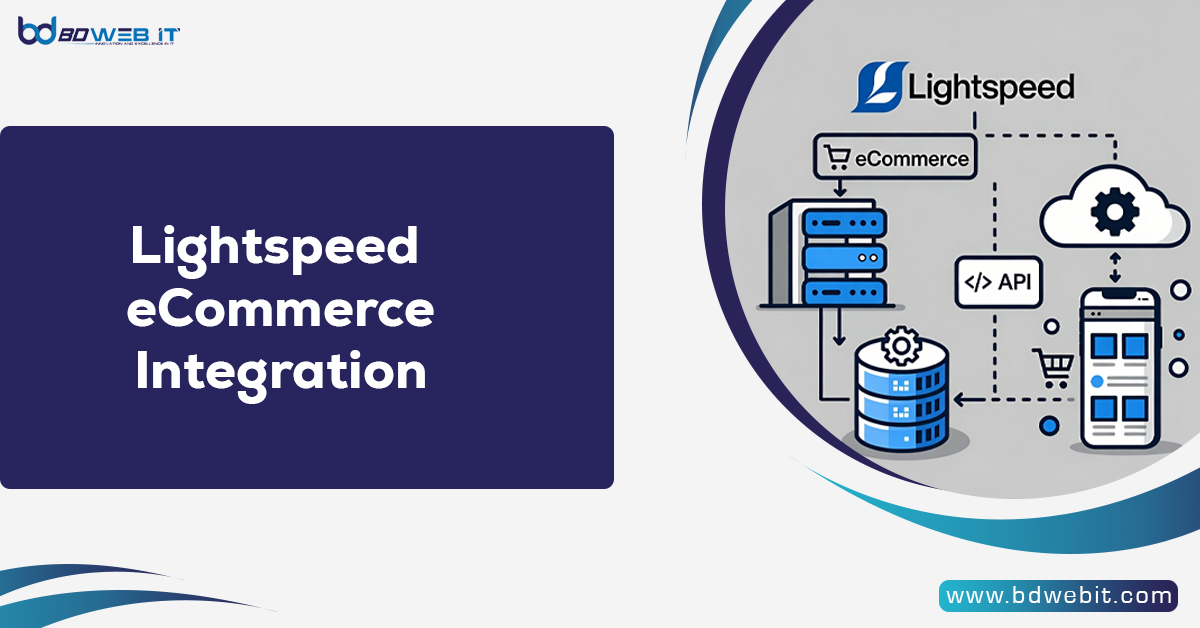
Lightspeed eCommerce integration refers to the act of linking a business’s Lightspeed system, whether it is the POS (Point of Sale), retail, or restaurant system, with other online tools, software, or services. This is done with the aim of making the business run more efficiently and providing a seamless online and offline shopping experience. In essence, Lightspeed eCommerce integration is the key to making a business run more efficiently while also providing a better customer experience.
Why Lightspeed eCommerce Integration Matters
The retail and hospitality industries are more competitive than ever before. Consumers demand:
- Accurate inventory across every sales channel
- Quick checkout, whether in-store or online
- Personalized recommendations based on past purchases
- Orders that can be fulfilled from any location
However, without integration, a store could have stock in Lightspeed POS that is not shown on its website, resulting in overselling. Alternatively, sales data could be isolated in different systems, making it impossible for business owners to get a clear view of what is happening.
That’s where Lightspeed eCommerce integration comes in—by breaking down data silos and connecting critical parts of the business.
What Lightspeed Can Integrate With
Lightspeed’s flexible APIs and partner ecosystem allow it to connect with many types of systems, such as:
Inventory Management Tools
This assists in automatically monitoring the level of inventory, automatically reordering when the inventory is low, and minimizing errors.
Order Management Systems (OMS)
Using an OMS enables businesses to manage order fulfillment from various channels, such as online, offline, and marketplaces.
Payment Gateways & Financial Software
Integration with payment solutions and accounting software such as QuickBooks or Xero helps with accounting and matches sales from different software.
CRM and Marketing Platforms
Customer engagement tools can sync purchase history and preferences so businesses can personalize campaigns, automate emails, and improve retention.
Shipping & Logistics Tools
Integration with carriers (like UPS, USPS, FedEx) means shipping labels, tracking, and fulfillment updates flow automatically between Lightspeed and the customer.
Online Sales & Marketplace Platforms
Whether selling on your own website or on marketplaces like Amazon and eBay, integration helps ensure accurate stock counts and unified order processing.
Key Benefits of Lightspeed eCommerce Integration
Here’s how businesses benefit when they connect Lightspeed with other systems:
Real-Time Inventory Sync
Imagine a customer purchases the last pair of shoes online—but the inventory wasn’t updated from in-store sales. With integration, inventory updates instantly across all channels, so stock levels remain accurate.
Unified Customer Data
Rather than separate lists for online buyers and in-store shoppers, integration brings customer profiles together. This lets you segment shoppers, follow buying habits, and tailor marketing messages.
Streamlined Order Processing
Orders from every source—website, mobile, in-store—are routed to one central system. This reduces manual entry, minimizes errors, and speeds up fulfillment.
Better Reporting & Analytics
Consolidated data means insights that actually matter. Owners can see total sales, top products, seasonal demand, and customer lifetime value all in one dashboard.
Omnichannel Experience
Customers expect seamless experiences when switching between online and in-store shopping. Integration makes sure pricing, promotions, and loyalty points remain consistent.
Reduced Manual Labor
Automated syncing saves hours previously spent exporting and importing spreadsheets between systems.
Common Integration Scenarios
Lightspeed + Shopify
One very popular integration is connecting Lightspeed with Shopify. This allows:
- Online storefront orders to sync with Lightspeed inventory
- Unified customer lists
- Combined reporting for both platforms
Shopify handles online sales, while Lightspeed manages inventory and POS—working together instead of in isolation.
Lightspeed + Accounting Software
For many businesses, accounting is a headache if data isn’t coming from all sales channels. Integrating with QuickBooks or Xero means sales, taxes, and financial records update automatically, reducing reconciliation work.
Lightspeed + CRM/Email Marketing
Pairing Lightspeed with CRM tools means you can send:
- Welcome emails to new customers
- Abandoned cart reminders
- Post-purchase follow-ups
This helps nurture loyalty and increase repeat purchases.
Lightspeed + Shipping Tools
Tools like ShipStation or Shippo can pull order details from Lightspeed, generate shipping labels, and provide tracking info without switching between systems.
How Integration Works: Technical Overview
At a technical level, Lightspeed eCommerce integration relies on three components:
APIs (Application Programming Interfaces)
Lightspeed offers APIs that allow third-party systems to request and update data securely. These APIs support:
- Inventory
- Orders
- Customers
- Products
- Payments
Middleware or Connectors
Many integrations work through middleware—software that sits between Lightspeed and another system, translating data and syncing in real time.
Webhooks
Webhooks allow Lightspeed to “push” updates to integrated systems whenever something changes (e.g., a new sale, a stock adjustment). This avoids delays and keeps everything in sync.
How to Choose the Right Integration for Your Business
Not all integrations are created equal. To choose the best one:
Identify Your Business Needs
Ask:
- Do I need real-time inventory updates?
- Is managing orders the biggest headache?
- Do I want to improve marketing automation?
Your answers help prioritize which systems to integrate first.
Check Compatibility
Some eCommerce platforms may not connect directly with Lightspeed, requiring middleware or custom development.
Evaluate Costs
Integration tools often charge per month, per user, or per data volume. Make sure the ROI justifies the cost.
Look for Support & Documentation
Good integrations come with strong support teams and clear documentation to guide setup and troubleshooting.
Common Challenges and How to Fix Them
Even with great potential, integrations come with challenges:
Data Mismatches
If two systems refer to products differently, syncing can fail.
Fix: Standardize product SKUs and naming conventions before integration.
Duplicate Customers
Without proper mapping, customers can be duplicated across systems.
Fix: Use email addresses or unique IDs as primary keys for matching.
Sync Delays
If sync happens only at intervals, stock might still lag.
Fix: Use real-time APIs or webhooks where possible.
Complex Setup
Integrations sometimes require technical skills.
Fix: Work with certified Lightspeed partners or developers.
Future of Lightspeed and eCommerce Integrations
The future looks exciting:
AI-Driven Personalization
Automated recommendations and personalized shopping experiences.
Bigger Ecosystem Partnerships
More integrations with marketplaces, logistics, and analytics tools.
Mobile-First Retailing
Better mobile apps and experiences connected to Lightspeed backends.
Voice & Visual Commerce
Buy now through voice assistants and visual search features connected to unified systems.
Final Thoughts
Lightspeed eCommerce integration is more than linking software—it’s a revolution in the way your business functions. In a world where consumers demand nothing but flawless, precise, and personalized experiences, the right approach to integration can save time, minimize mistakes, and maximize profits. Whether you run a retail business, a restaurant, or a combination of both online and offline stores, integrating your Lightspeed system with the right software is one of the most effective decisions you can make for business growth.