
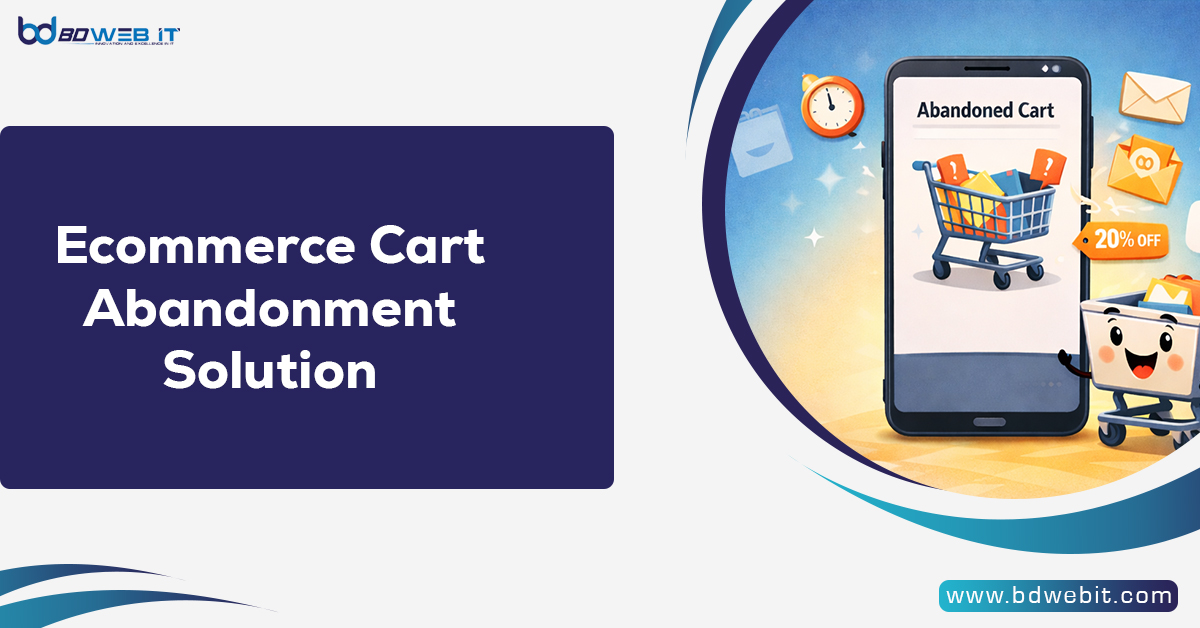
One of the toughest problems faced by online merchants is ecommerce cart abandonment—however, the answer is to know what causes people to leave before they make purchases and addressing exactly those solution that prevent them from going all the way through with it. Basically, decreasing the number of abandoned carts involves a combination of improved user experience, clear prices, and many other aspects.
Reduce lost sales with the best ecommerce cart abandonment solution strategies. Learn how to recover carts, boost conversions, and improve checkout experience fast.
Understanding Ecommerce Cart Abandonment
Cart abandonment occurs when a prospective client places items into their cart yet does not complete the transaction by leaving the site. Depending on the sector, cart abandonment rates may vary between 60% and 80%. Essentially, all your earnings are going down the drain.
But this isn’t just bad news; it’s also a chance. These users have already shown intent. They’re much easier to convert than new visitors if you approach them correctly.
Why Customers Abandon Their Carts
Before solving the problem, you need to understand the root causes. Here are the most common reasons:
1. Unexpected Costs
Hidden shipping fees, taxes, or additional charges at checkout often scare customers away.
2. Complicated Checkout Process
Long forms, forced account creation, or too many steps can frustrate users.
3. Lack of Trust
If your website doesn’t look secure or credible, users hesitate to enter payment details.
4. Slow Website Speed
Even some seconds of delay can lead to drop-offs.
5. Limited Payment Options
Customers want flexibility—credit cards alone aren’t enough anymore.
6. Just Browsing
Some users aren’t ready to buy yet—they’re comparing prices or saving items for later.
Proven Ecommerce Cart Abandonment Solution
So, we move on to discussing some effective remedies.
1. Simplify the Checkout Process
The quickest way to lose a customer is to make the checkout process too hard.
- Use a one-page checkout if possible
- Allow guest checkout
- Minimize form fields (only ask for indispensable information)
- Enable auto-fill and address lookup
The goal is simple: make buying as quick and effortless as possible.
2. Be Transparent About Costs
The main reason people leave their carts is because of unexpected costs.
- Show shipping fees upfront
- Put a shipping calculator on the page for the product
- Highlight free shipping thresholds
When customers know the total cost early, they’re more likely to continue.
3. Optimize Website Speed and Mobile Experience
A slow website kills conversions.
- Optimize images and scripts
- Use a reliable hosting provider
- Ensure your site is fully mobile-responsive
Over 50% of ecommerce traffic originates from mobile phones, and therefore, your checkout should be perfectly functioning in small-screen environments.
4. Use Security and Social Proof to Build Trust
Trust is critical when money is involved.
- Add SSL certificates (HTTPS)
- Display trust badges and secure payment icons
- Show customer reviews and ratings
- Include clear return and refund policies
Even small trust signals can significantly increase conversions.
5. Use Exit-Intent Popups
Exit-intent technology can tell when a visitor is about to leave your site.
You can trigger a popup offering:
- A discount code
- Free shipping
- A reminder of items in the cart
This last-second nudge often convinces users to stay and complete their purchase.
6. Send Cart Abandonment Emails
Email marketing is one of the most effective recovery strategies.
Best Practices:
- Send the first email within 1 hour
- Follow up with 2–3 reminder emails
- Include product images and links back to the cart
- Add urgency (e.g., “Limited stock available”)
Example Email Flow:
- Reminder email
- Social proof + benefits
- Discount offer (if needed)
These emails can recover up to 10–20% of abandoned carts.
7. Retargeting Ads
Not all users will return through email. That’s where retargeting comes in.
Use platforms like:
- Facebook Ads
- Google Display Network
Show ads featuring:
- The exact products left in the cart
- Special offers or discounts
This keeps your brand top-of-mind and brings users back to your store.
8. Offer Multiple Payment Options
Customers have different payment preferences.
Include:
- Credit/debit cards
- Digital wallets (Apple Pay, Google Pay)
- Buy Now, Pay Later (BNPL) options
The more flexible you are, the fewer barriers to purchase.
9. Create Urgency and Scarcity
People are more likely to do something when they think they might miss out.
- Show low stock alerts
- Add countdown timers for deals
- Highlight “Only 2 left in stock”
But be honest—fake urgency can damage trust.
10. Improve Product Pages
Sometimes the problem starts before checkout.
Make sure your product pages include:
- High-quality images
- Clear descriptions
- Customer reviews
- FAQs
A confident buyer is less likely to abandon their cart later.
11. Use Live Chat Support
Customers often have last-minute questions.
Adding live chat can:
- Address concerns instantly
- Reduce hesitation
- Improve overall user experience
Even a simple chatbot can help guide users through checkout.
12. Enable Cart Saving
Let users save their cart for later.
- Allow login-based cart syncing
- Send reminders when items are still in the cart
This is especially useful for users who aren’t ready to buy immediately.
Measuring and Improving Your Results
Keep an eye on key metrics to see if your plans are working:
- Cart abandonment rate
- Checkout completion rate
- Email recovery rate
- Average order value (AOV)
Utilize special software, such as heat maps in order to detect where people abandon their activity.
Continuous testing is key. Try A/B testing differently:
- Checkout designs
- Email subject lines
- Discount offers
Small changes can lead to big improvements.
Final Thoughts
Cart abandonment on ecommerce does not mark the end; it marks another opportunity. All the abandoned carts mean that there is a lost opportunity that needs some effort from you to win back the sale. This involves reducing barriers, creating trust, and lastly following up smartly.
To begin, focus on making simple transactions; be upfront about pricing, and ensure your site is optimized for good performance. Advanced tactics include sending out emails and even retargeting.
What will be the result? Increased conversion rates & higher revenue generation.